
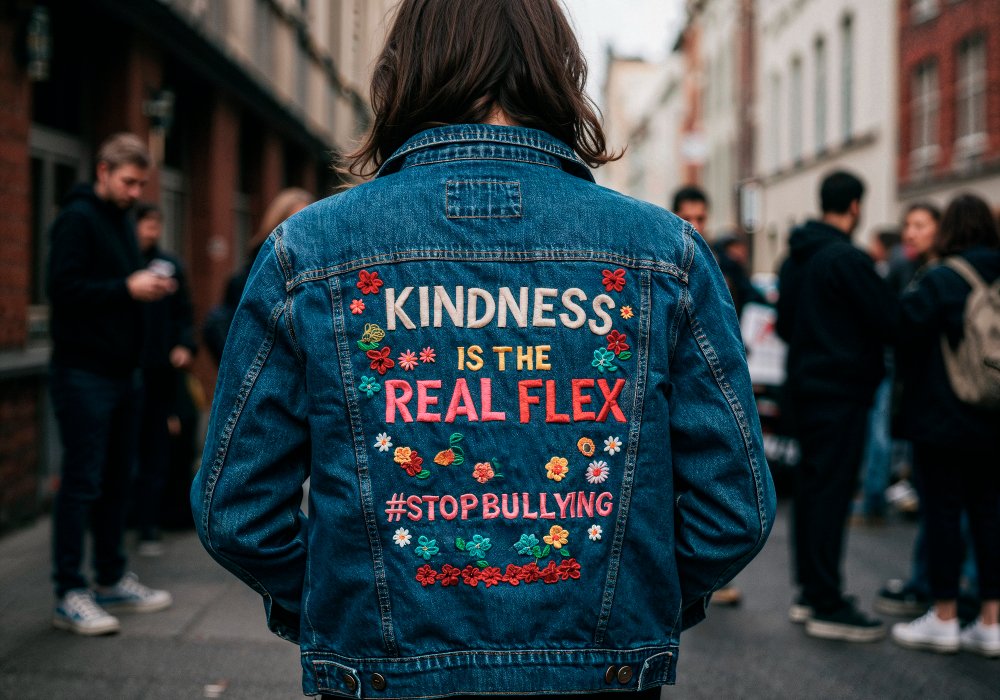
Large embroidered logos can make jackets stand out, whether they are used for company uniforms, motorcycle clubs, sports teams, workwear, streetwear, or branded merchandise. But a design that looks sharp on a screen may need careful preparation before it can be stitched across the back of a jacket. Jacket back embroidery digitizing converts artwork into a machine-readable file. The digitizer plans stitch types, directions, density, underlay, sequencing, and other details so the machine can reproduce the design in thread. Large designs need this planning because the result depends on the artwork, garment, machine, and production setup.
What Is Jacket Back Embroidery Digitizing?
Jacket back embroidery digitizing turns a logo, emblem, lettering layout, or large graphic into stitch instructions for an embroidery machine. Unlike a regular image file, an embroidery file tells the machine how to build the design using thread. A large back design may include lettering, outlines, filled shapes, and multiple colors. The digitizer considers how these elements will be stitched and whether details need adjustment to remain clear. A small left-chest design should not simply be enlarged without reviewing stitch count, density, direction, and sequencing.
Why Large Jacket Logos Need Careful Digitizing
Large filled areas can become heavy or stiff if they use too many stitches. Poor planning can contribute to puckering, thread buildup, gaps, or fabric distortion. Small text and narrow lines may also lose clarity when stitched. The jacket material matters: denim, twill, fleece, satin, and padded outerwear behave differently under a needle. Tell the digitizer the fabric, available panel dimensions, and intended placement. Confirm the machine’s hoop or embroidery-area limits before ordering.
How to Prepare Artwork for Jacket Back Embroidery
1. Provide the clearest artwork available. AI, EPS, or SVG vector files can be helpful; a clear PNG, JPG, or PDF may also work as a reference. 2. Confirm the finished width and height. 3. Identify the jacket material and construction. 4. Specify whether the design belongs on the upper back, center back, or another area. 5. List essential text, symbols, outlines, and brand colors. 6. Confirm the machine format required by the embroidery operator. Artwork files and embroidery files are different: a JPG or PNG shows the image, while the digitized file contains stitch instructions.
Choosing Stitch Types for Large Back Designs
Fill stitches commonly cover larger areas of color. Satin stitches can be used for borders, lettering, and narrow shapes within suitable width limits. Running stitches may work for fine outlines and line details. Underlay can stabilize fabric and support top stitches, while pull compensation accounts for fabric being drawn inward during stitching. These settings should be selected for the actual design and material, not applied as a universal formula.
Which Embroidery File Format Do You Need?
Common machine embroidery formats include DST, PES, EXP, JEF, and VP3. Compatibility depends on the machine and software. DST is widely used in commercial workflows, while other formats are associated with particular systems. Check the machine manual or ask the production team before ordering. If multiple shops will use the design, list each required format and confirm which deliverables are included.
What Affects the Cost of Jacket Back Digitizing?
Pricing can depend on artwork complexity, dimensions, stitch count, number of colors, special techniques, required file formats, and revisions. A detailed illustration may need more planning than simple lettering. Large designs may involve more stitches, but stitch count depends on coverage and digitizing decisions as well as size. Ask for a quote that states what files are included, the expected turnaround, and whether revisions are included. These terms vary by provider.
How to Choose a Jacket Back Embroidery Digitizing Service
Review samples of large jacket-back designs. Share the fabric, dimensions, and placement before work starts. Confirm supported formats and what files you will receive. Discuss delivery timing and revision terms. For a large production run, consider a sample stitch-out to review coverage, lettering, and fabric behavior. A digital preview is useful, but testing on the actual garment can reveal issues that are not obvious on screen.
Common Mistakes to Avoid
Avoid enlarging a small logo without checking the digitizing; using tiny lettering; ignoring fabric thickness, lining, or stretch; ordering a design that exceeds the available embroidery area; assuming one file will work on every garment and machine; and skipping a test stitch-out for a high-volume order.
Who Needs Jacket Back Embroidery Digitizing?
This service can suit clothing brands, workwear suppliers, motorcycle clubs, sports teams, event organizers, promotional merchandise companies, and embroidery shops. If the design will be used on multiple jacket styles, ask whether separate versions or adjustments are recommended for different materials and sizes.
Prepare Your Jacket Logo with Thread Genix
A large jacket-back design needs thoughtful planning so its important details translate into thread. Prepare the artwork, dimensions, jacket material, placement, and required machine format before ordering. Thread Genix provides embroidery digitizing services for customers who need artwork prepared for machine embroidery. Share your project details and confirm available formats, pricing, turnaround, and revision terms before placing an order. Ready to prepare a large jacket logo? Contact us for a Free Quote.
Frequently Asked Questions
What is jacket back embroidery digitizing?
It converts a large jacket logo or design into stitch instructions that an embroidery machine can read.
Can any logo be digitized for a jacket back?
Many logos can be adapted, but intricate details and small text may need changes. Results depend on size, fabric, and production setup.
What is the best size for a jacket back design?
There is no universal size. Measure the available panel and confirm the machine’s embroidery-area limits.
Which file format is used for jacket embroidery?
Common formats include DST, PES, EXP, JEF, and VP3. The correct one depends on the machine and software.
Does a large embroidery design use more stitches?
Often, but stitch count also depends on coverage, stitch types, and digitizing choices.
Can one design work on different jacket fabrics?
Sometimes, but different materials may require adjustments or separate versions.
How much does jacket back digitizing cost?
Pricing varies with complexity, dimensions, stitch count, formats, and revision terms.
Should I test a large jacket embroidery file?
For important or bulk orders, a sample stitch-out helps check coverage, readability, and fabric behavior.